The idea behind D.i.S.C. is to match or mirror the communication style of the person you’re talking with to make them more comfortable (and loosen their lips). This is just one of the ways you can mirror a person during a conversation. First you need to determine their communication style (and know yours).
According to Dr. Williams Marston, the creator of D.i.S.C. theory there are four personality types:
- Dominant Driver
- Influencer/Socializer
- Steady/Relater
- Compliant/Conscientious/Thinker
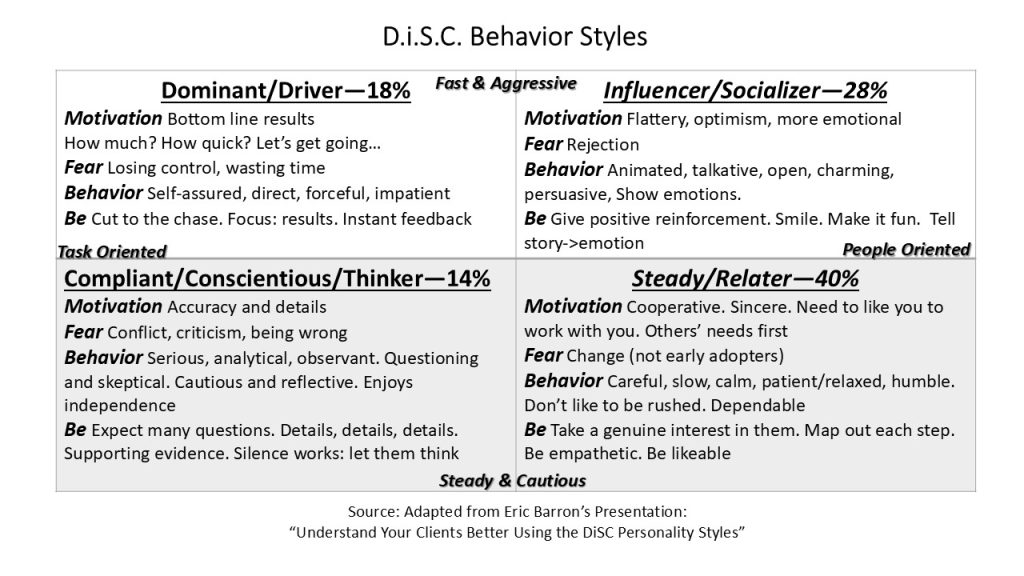
Dominant/Drivers are confident, driven and direct in their mannerisms. They are often risk takers and are more apt to cause an ulcer than to have one. Communicate with this type directly. Don’t tell them stories and get right to the point. They are task oriented and motivated to achieve bottom line results. They fear losing control and wasting time. Their behavior tends to be impatient, self-assured and forceful.
Influencer/Socializers are natural networkers and can be quite expressive in their communication. Focus on building a relationship as you communicate with an Influencer. If you’re selling to an influencer, supply testimonials and give them examples about who is using your product or service. Influencers are more people oriented and tend to be animated, talkative, open, charming yet also persuasive. They fear rejection and are motivated by optimism, flattery and are more emotional. Give them reinforcement and smile. Make it fun. Tell stories.
Steady/Relaters are people oriented, amicable and are uncomfortable with conflict. They are good listeners and collaborators who are loyal and sincere in relationships. They need to like you to work with you and place others’ needs before their own. They don’t like to be rushed and tend to be slow, calm, patient, relaxed and humble. Focus on the personal touch and make sure that you get back to them personally. Be likeable and empathetic. Take a genuine interest in a Steady/Relater.
Compliant/Conscientious/Thinkers are often very bright, task-oriented and analytical. They are logical and detail-oriented and tend to micromanage. Be prepared for extensive questions and provide details and supporting evidence in your answers. However, don’t include your stories or small talk in your answers. Compliants tend to be serious, observant, skeptical, cautious and reflective. They don’t like to be wrong, criticized or in conflict. Like Dominants, They fear loss of control but also accuracy. Silence is appreciate by this type as it gives them time to think.
Considerations
No one person has exactly one of these four personality types. Predisposition is also affected by what is going on in a person’s life. Emotions such as fear, stress or joy can change a person’s normal predisposition. This can change during your conversation. For example, you might bring up something he’s uncomfortable with; or that she’s proud of; or that makes him impatient.
That’s why I also consider a person’s EQ. How empathetic is the person you’ll speak with? How do you think this will change under stress or other emotions? Empathy towards others often softens them. You’re a fellow human being and you want to treat him as the individual he is.
- So which communication style do you tend to be?
- Which communication styles are easier or harder for you to adapt to?
Figure this out and you’ll loose their lips! Want more tips on how to Loosen Lips, read Loosen Their Lips.
